Farewell to Palmer’s Bar
In September 2025, the lights will go out for good

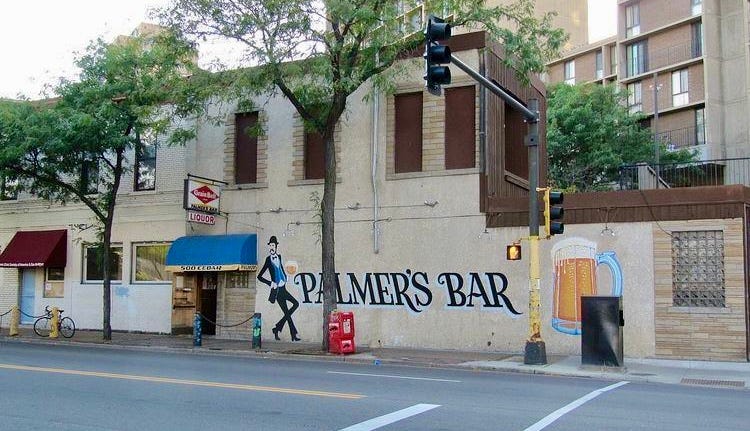
For more than a century, Palmer’s Bar stood as a bastion of blue-collar grit and dive-bar charm in Minneapolis’ Cedar-Riverside neighborhood. It was a place where musicians found their voice, where beer was cheap, and where the spirit of working-class America could still be felt through a haze of jukebox blues and cigarette smoke. But in September 2025, the lights will go out for good. The owners have sold the building. And many are asking why.
From a conservative standpoint, the answer is simple: freedom of choice, market reality, and community evolution.
Private Property and Free-Market Decisions
At the heart of this story lies a principle we hold dear—property rights. Palmer’s was not a public institution. It was a privately owned business. The owners—facing mounting losses in the tens of thousands every month—made the rational and responsible decision to sell. That’s how a free economy works. No business, no matter how iconic, is entitled to survive if it can’t make ends meet.
This wasn’t a hostile takeover. It wasn’t a cultural erasure. It was a classic small business story: passionate owners gave it their best, ran into economic headwinds, and bowed out with dignity.
The Realities of Changing Demographics
Another truth we conservatives are unafraid to acknowledge is that communities change. Cedar-Riverside today isn’t what it was in 1985—or even 2005. With a growing East African immigrant population and a declining demand for alcohol-based nightlife in the area, the traditional bar model just doesn’t align with the neighborhood’s values or habits anymore.
Is that a loss for the nostalgic? Sure. But it’s also a natural shift, one driven by freedom of movement and local culture—not by coercion or top-down planning. The new owners, associated with the Dar Al-Hijrah Mosque, have plans to transform the space into a community center focused on youth, education, and the arts. That, too, is a form of local investment—just one shaped by different values.
Sentiment Isn’t a Business Model
Palmer’s was loved. That’s clear. But love doesn’t pay the bills. Markets reward innovation, adaptability, and demand—not memories. This is where conservative thinking often diverges from romanticism: we honor the past, but we do not live in it.
The idea floated of converting Palmer’s into a worker-owned co-op is touching in theory, but as the owners themselves said, they couldn’t in good conscience hand over a sinking ship. Conservatism teaches responsibility over wishful thinking—and that includes knowing when to step away.
Conclusion: A Legacy, Not a Loss
Some will mourn the closing of Palmer’s as the death of something irreplaceable. But perhaps it’s better viewed as a successful, long-run venture that simply reached its end. A business that lived more than 100 years and touched countless lives. That’s not failure. That’s legacy.
And now, through the free choices of those who loved it most, that legacy will give way to a new chapter—one shaped by the next generation of Minnesotans.
Change, when it comes from the ground up, is not something to fear. It’s something to respect.