
Minnesota’s Endless Appetite for School Spending
Time to start auditing schools and school districts

A majority of dumbass Minnesota voters once again approved higher school taxes. About 62 percent of local school levy increases passed, even as the state pours unprecedented amounts of money into K–12 education. Lawmakers have boasted of “record funding,” with nearly $25.7 billion allocated for the 2026–27 biennium and automatic annual increases tied to inflation. Yet despite these enormous sums, many districts insist they are still underfunded. The questions every taxpayer should be asking is simple: how much is enough? And what the hell are you spending all that money on?
Minnesota’s education establishment has become addicted to spending. Every election cycle brings a new wave of levy campaigns, each claiming to be essential for “the children.” But these requests now come on top of a historic state investment—an increase of nearly five percent from the previous biennium and billions more than just a few years ago. When government spending grows faster than family income, the burden lands squarely on homeowners and small businesses through higher property taxes.
The results of the most recent elections reveal a troubling trend. Districts continue to expand budgets while enrollment declines, meaning more dollars are being spent on fewer students. Administrative costs keep climbing, often faster than classroom spending. Some superintendents warn of “cuts” even as their districts receive millions in new revenue. Taxpayers are told that unless they approve more levies, programs and teachers will be slashed—yet rarely do we see meaningful reforms or spending restraint from the top.
Supporters of endless funding increases argue that inflation justifies higher levies. But families and businesses also face inflation and cannot simply vote themselves a raise. True fiscal responsibility means setting priorities, not demanding more every time expenses rise. Minnesota’s schools should focus on academic results, efficient management, and accountability for how dollars are used before asking taxpayers to hand over more.
This is the result of an endless supply of “more money.”
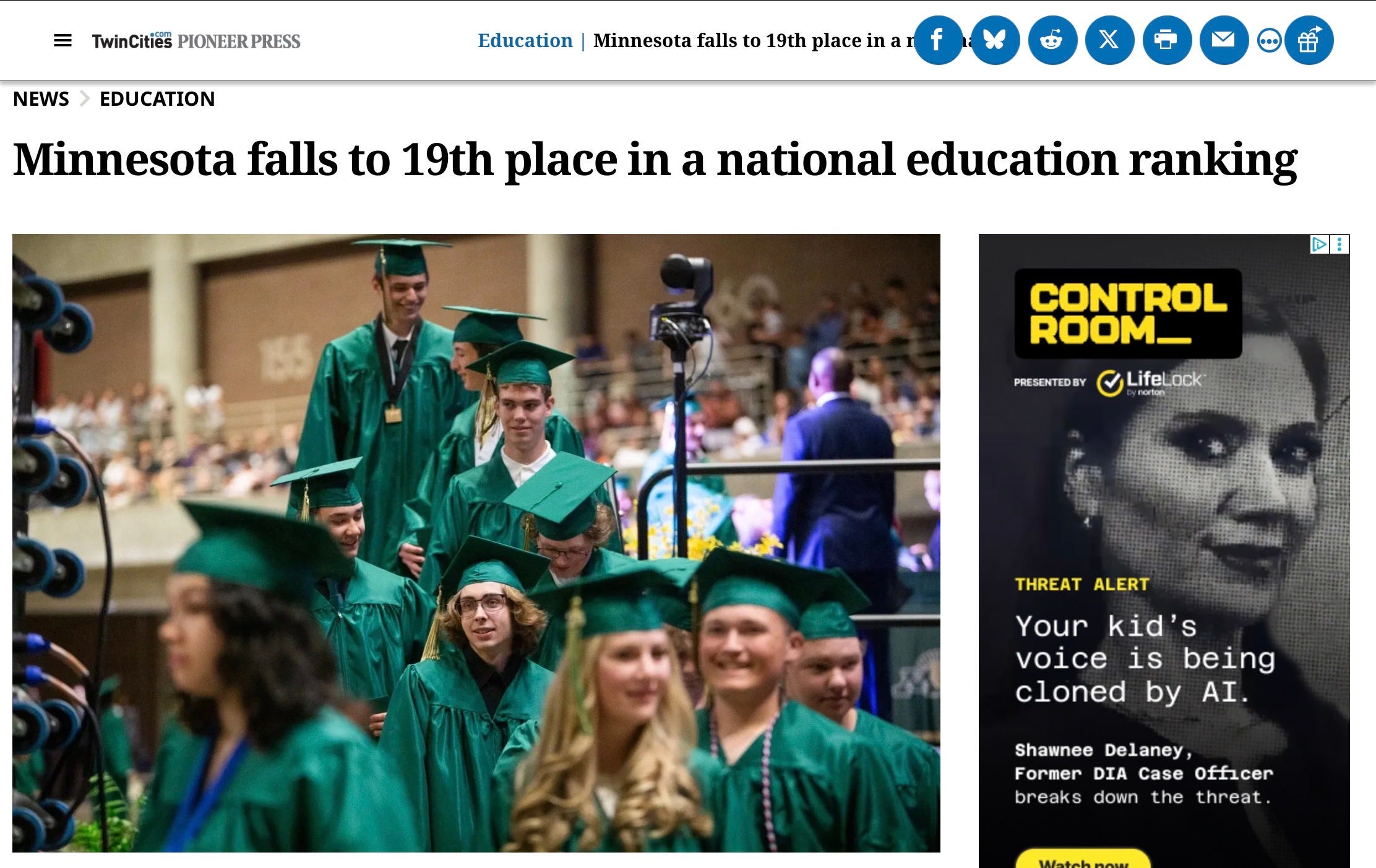
It’s exactly what 2022 Gubernatorial candidate Scott Jensen said about education funding, “It’s a black hole.” And it is. Education has never been cut, always more, and with the levies, even more on top of that, and it’s still not enough, and it never will be.
Governor Tim Walz has implemented significant increases in education funding since taking office in January 2019. The most notable achievement is the $2.3 billion education budget signed into law, marking the largest investment in public education in Minnesota’s history.
With those massive increases you would think education would be rising, not falling like it is, that should tell a person that more money isn’t the answer and doesn’t work and there’s frivolous spending that needs to be audited.
A big part of it is the socialized “free” school breakfasts and lunches year round. Schools are not soup kitchens. And the indoctrination and social engineering cost money and have nothing to do with education. Locally, schools want state of the art performing arts centers, concert halls, etc… Again, having nothing at all to do with education. Enough is enough.
And they keep begging for more and the dumb f—kers here keep voting yes because “it’s for education,” too stupid to realize the obvious, it isn’t. That’s one thing about Minnesota, if you ever want to raise taxes all you have to do is say one of two things, or both, and they are, “it’s for education” and/or, “it’s for the environment” and these damned fools will vote it in every time.
It is however, telling that nearly four in ten levy proposals failed. Hopefully because voters are waking up to the reality that more money does not automatically mean better outcomes, it usually never does. The state already provides record support for education; the problem lies in how those resources are managed. Until school districts demonstrate they can live within their means and deliver measurable results, taxpayers should think twice before approving another tax increase. The time has come to demand stewardship, not just spending. It’s also time to start auditing schools and school districts.