
Phelps Mill
Phelps Mill was designed to produce 60 to 75 barrels of flour per day. Its success led to expansions, including a three-story addition in 1895 to accommodate the grinding of buckwheat and rye

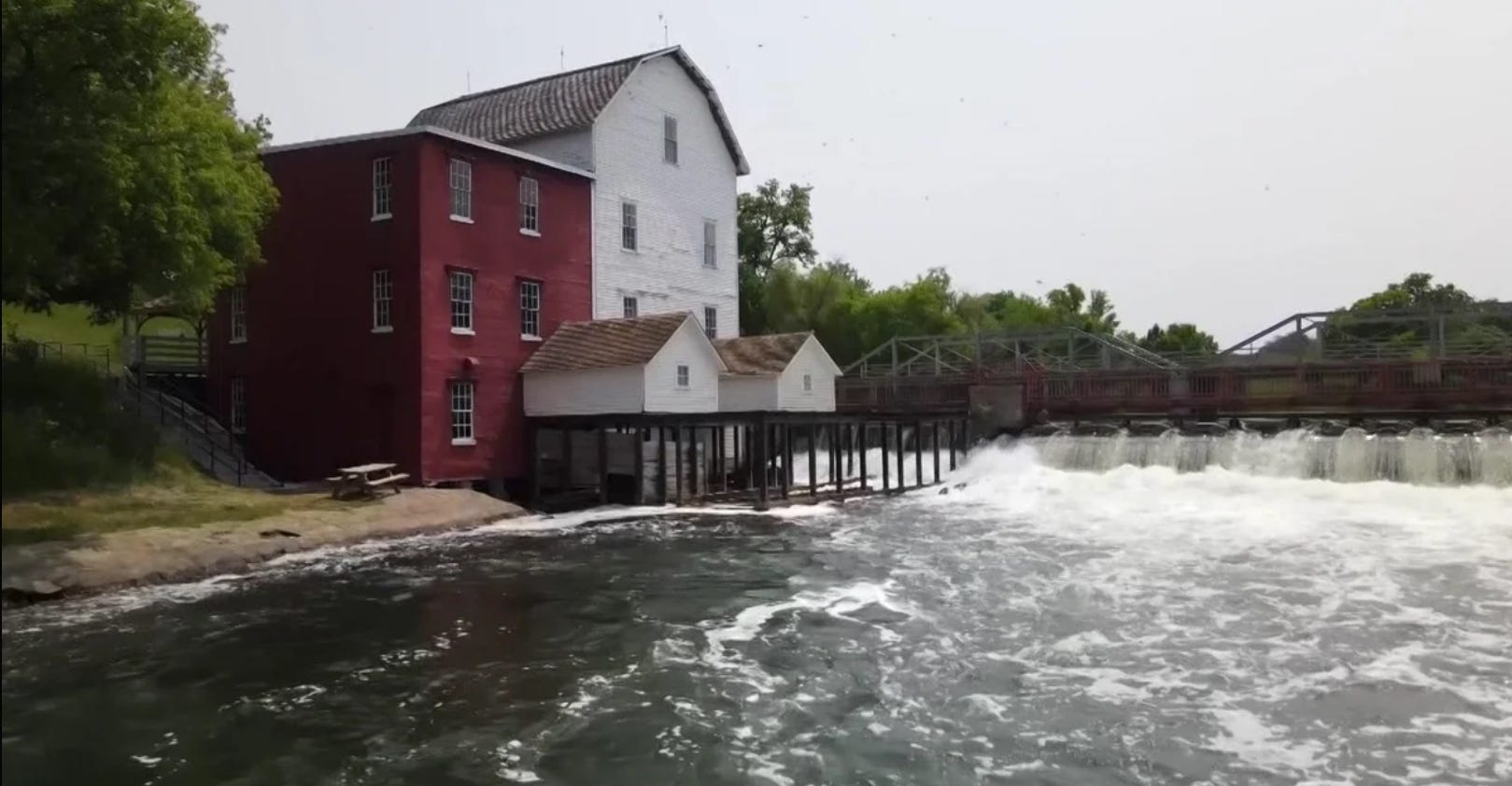
Nestled in the scenic countryside of Otter Tail County, Minnesota, stands as a remarkable testament to the region's agricultural and industrial heritage. Constructed between 1888 and 1889 by William E. Thomas, a flour and feed businessman from Fergus Falls, the mill was established to meet the growing demand for local flour production during a time when transporting wheat to distant mills was often impractical.
A Flourishing Enterprise
Originally known as the Maine Roller Mills, Phelps Mill was designed to produce 60 to 75 barrels of flour per day. Its success led to expansions, including a three-story addition in 1895 to accommodate the grinding of buckwheat and rye . The mill utilized innovative roller mill technology and was powered by water turbines, distinguishing it from many contemporaries that relied on traditional water wheels .
Decline and Preservation
As technological advancements introduced more efficient power sources and transportation methods, small rural mills like Phelps Mill faced decline. After changing ownership, the mill ceased operations in 1939 . Recognizing its historical significance, local activist Geneva Tweten spearheaded efforts to preserve the mill, leading to its acquisition by Otter Tail County in 1965 and its listing on the National Register of Historic Places in 1975.
A Living Museum
Today, Phelps Mill serves as a county park and historical site, offering visitors a glimpse into 19th-century milling operations. The mill's original machinery remains intact, and interpretive signs provide insights into its operation . The site also hosts the annual Phelps Mill Festival, celebrating local arts and crafts .


