
The smallest Metropolitan Statistical Area (MSA) in Minnesota
Mankato–North Mankato MSA, with approximately 105,700 residents

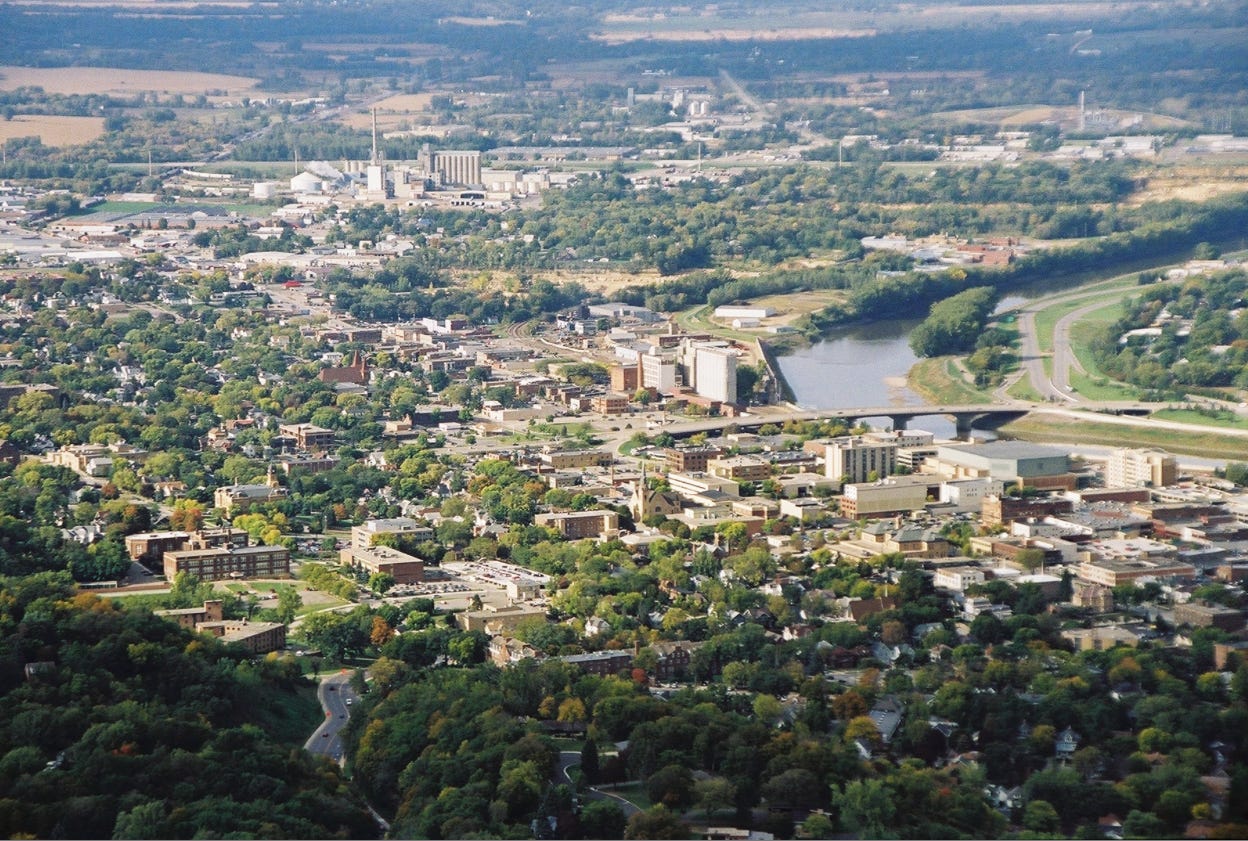
The smallest Metropolitan Statistical Area (MSA) in Minnesota by population is the Mankato–North Mankato MSA, with approximately 105,700 residents as of recent estimates.
For comparison, here are the population figures for the other MSAs in Minnesota:
St. Cloud MSA: ~201,900.
Rochester MSA: ~233,400.
Fargo, ND–MN MSA: ~266,300.
Duluth MSA: ~280,900.
And, of course, Minneapolis–St. Paul is much larger at about 3.8 million.
So among the official metropolitan areas in Minnesota, Mankato is the smallest in terms of population.
City Highlights
Mankato
City population: approximately 46,459 as of mid‑2024.
Known for its scenic Minnesota River valley setting, parks, trails, and as home to Minnesota State University, Mankato—the state's second‑largest university.
Serves as a regional economic hub with growing diversity, strong ties to agriculture, education, and healthcare sectors.
North Mankato
Population: about 14,275 as of the 2020 Census; most of the city lies in Nicollet County, with a portion in Blue Earth County .
Together, Mankato and North Mankato form the core urban area of the metro region, with a combined city population of ~58,800 in 2020, expanding to over 100,000 in surrounding areas .
Why It Matters
While branded as a "small" metro, this region is experiencing steady growth and plays an outsized role in southern Minnesota's economic and cultural life .
Its size contributes to a close-knit feel and offers residents access to both regional amenities and rural surroundings—all within an hour of the Twin Cities.
